buy DSIP
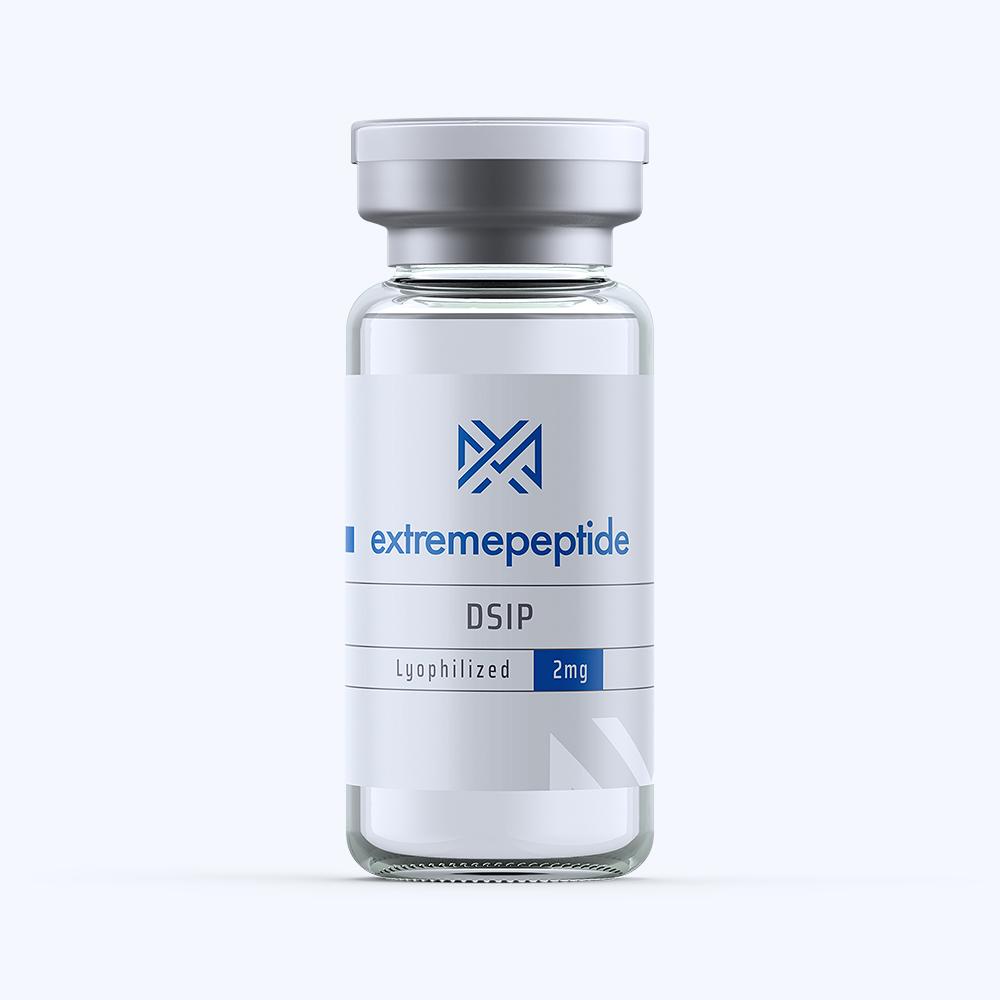
DSIP DSIP is a synthetic analogue of a naturally occurring nonapeptide primarily produced in the cerebrospinal fluid during sleep in mammals1, though the peptide has been found in the hypothalamus, the pituitary, and adrenal glands2. Adminstration of DSIP has been shown to induce sleep or to correct dysfunctional (i.e. narcoleptic) sleeping patterns in animal subjects, hence the DSIP acronym representing ‘Delta-Sleep Inducing Hormone3’. This neuropeptide has also been shown to reduce chronic pain4, alleviate withdrawal symptoms in opiate and alcohol dependent subjects5, DSIP and to reduce the symptomatic severity of major depressive disorder6.
Through extensive research, it has been shown that DSIP is an extremely versatile peptide with important roles throughout mammalian systems. It has been demonstrated that DSIP is a potent endrocine regulator with specific action in the inhibition of somatostatin secretion, which led to enhanced secretion of growth hormone (GH) and enhanced muscle growth in animal trials7. DSIP has also proven to be an effective alleviator of stress, reducer of blood pressure, and normalizer of irregular heart impulses8.
Anti-Oxidant Benefits
DSIP also plays a role in preventing serious pathologies through its action as a stimulator of oxidative phosphorylation, thereby inducing anti-oxidative effects throughout mammalian systems9. Anti-oxidising agents have been demonstrated as potent defenses against spontaneous tumour generation10, preventing various cancers caused by free radical associated genetic damage. Via the same mechanism, DSIP shows great potential as a defense against age-related pathologies11, working to clear the body of free radicals when senescent immune systems prove insufficient.
Synonyms:
Delta sleep inducing peptide; Phosphorylated delta sleep inducing peptide; DSIP;
Peer-Reviewed Sources:
- Zlokovic, B. V., Segal, M. B., Davson, H., & Jankov, R. M. (1988). Passage of delta sleep-inducing peptide (DSIP) across the blood-cerebrospinal fluid barrier. Peptides, 9(3), 533-538. ↩︎
- Okajima, T., & Hertting, G. (1986). Delta-sleep-inducing peptide (DSIP) inhibited CRF-induced ACTH secretion from rat anterior pituitary gland in vitro. Hormone and metabolic research= Hormon-und Stoffwechselforschung= Hormones et metabolisme, 18(7), 497-499. ↩︎
- Schoenenberger, G. A. (1984). Characterization, properties and multivariate functions of delta-sleep-inducing peptide (DSIP). European neurology, 23(5), 321-345. ↩︎
- Larbig, W., Gerber, W. D., Kluck, M., & Schoenenberger, G. A. (1984). Therapeutic effects of delta-sleep-inducing peptide (DSIP) in patients with chronic, pronounced pain episodes. European neurology, 23(5), 372-385. ↩︎
- Burov, Y. V., Yukhananov, R. Y., & Maiskii, A. I. (1982). Content of delta-sleep-inducing peptide in the brain of rats with different levels of alcohol motivation. Bulletin of Experimental Biology and Medicine, 94(3), 1240-1242. ↩︎
- Walleus, H., Widerlöv, E., & Ekman, R. (1985). Decreased concentrations of delta-sleep inducing peptide in plasma and cerebrospinal fluid from depressed patients. Nordic Journal of Psychiatry, 39(S11), 63-67. ↩︎
- Iyer, K. S., & McCann, S. M. (1987). Delta Sleep Inducing Peptide Inhibits Somatostatin Release via a Dopaminergic Mechanism1. Neuroendocrinology, 46(1), 93-95. ↩︎
- Arkhangel’skaia, M. I., & Zviagintseva, M. A. (1988). [Effect of delta-sleep inducing peptide on electrical instability of the heart in emotional stress].Patologicheskaia fiziologiia i eksperimental’naia terapiia, (2), 45-49. ↩︎
- Bondarenko, T. I., Miliutina, N. P., Shustanova, T. A., & Mikhaleva, I. I. (1999). [Regulatory effect of delta sleep-inducing peptide on the activity of antioxidant enzymes in erythrocytes and tissues of rats during cold stress]. Rossiiskii fiziologicheskii zhurnal imeni IM Sechenova/Rossiiskaia akademiia nauk, 85(5), 671-679. ↩︎
- Popovich, I. G., Voitenkov, B. O., Anisimov, V. N., Ivanov, V. T., Mikhaleva, I. I., Zabezhinski, M. A., & Yashin, A. I. (2003). Effect of delta-sleep inducing peptide-containing preparation Deltaran on biomarkers of aging, life span and spontaneous tumor incidence in female SHR mice. Mechanisms of ageing and development, 124(6), 721-731. ↩︎
- Anisimov, V. N., & Khavinson, V. K. (2010). Peptide bioregulation of aging: results and prospects. Biogerontology, 11(2), 139-149. ↩︎