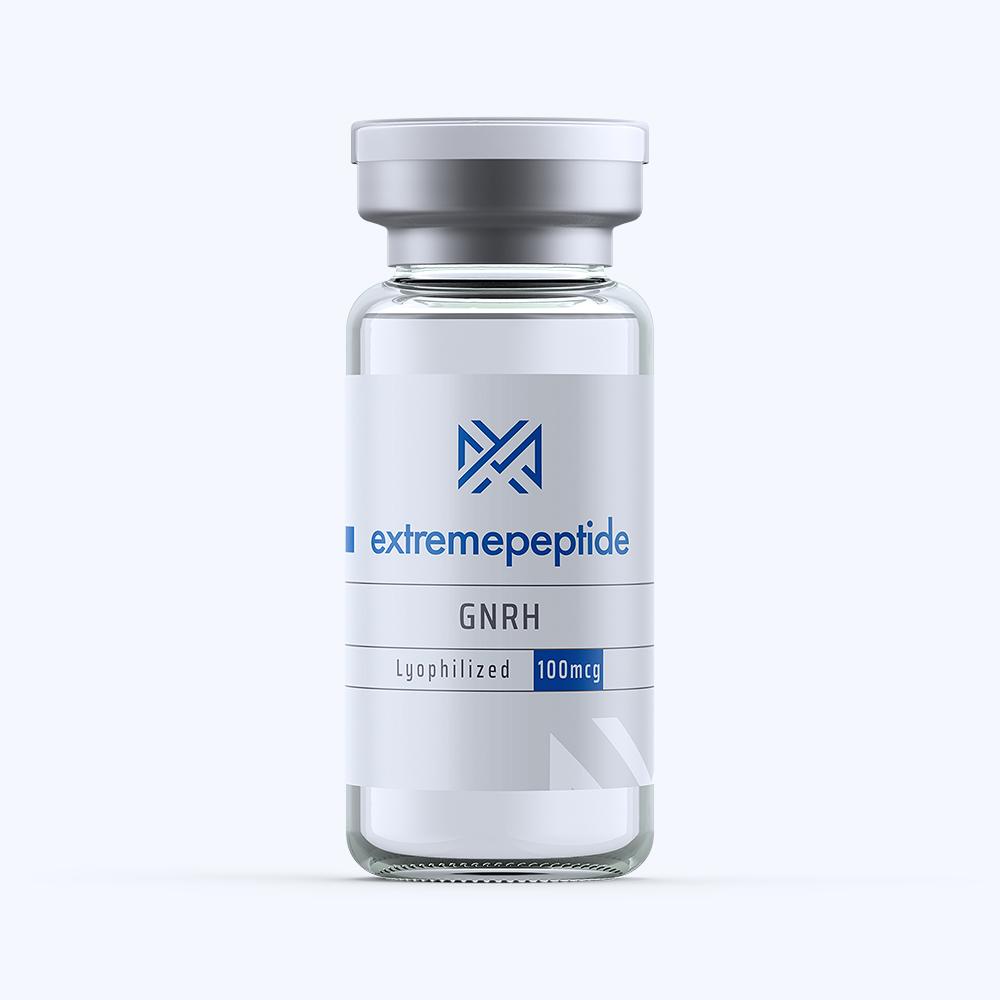
GnRH (Triptorelin)
GnRH (Triptorelin) Gonadotropin releasing hormone (GnRH) is a synthetic, 10 amino acid sequence, which is structurally identical to the naturally occurring anterior pituitary hormone stimulating hypothalamic decapeptide bearing the same name1. Pulses of GnRH from the hypothalamus are responsible for the synthesis and release of gonadotropins like luteinizing hormone (LH) and follicle-stimulating hormone (FSH), which are hormones intimately related to mammalian sexual preparation and response2.
buy GnRH (Triptorelin)
GnRH (Triptorelin) In mammalian males, pulses of GnRH initiate the process of testosterone production and spermatogenesis (sperm production)3. The introduction of endogenous GnRH to animal test subjects has been shown to raise males’ testosterone capacity beyond natural levels, which has demonstrated effects of promoting bursts of intense energy and aggressive behaviour4.
Product Comparison
GnRH analogues have developed in order exercise further control over the release of GnRH, and in following, LH and FSH. A GnRH agonist was synthesized and was meant to be active in promoting the release of GnRH, though this peptide was found only to cause an initial ‘flare’ of GnRH release, followed by downregulation of native GnRH production in animal tests5. Direct administration of synthetic GnRH, assuming reasonable temporal spacing between treatments, has been shown to induce marked increases in LH, FSH, and testosterone levels during tests with young and old male rats6.
Certain GnRH agonists, like Triptorelin, have been found successful in suppressing LH and FSH production while simultaneous promoting the production of testosterone. During in vivo circulation, this GnRH agonist puts forward a constant stimulatory effect on the pituitary gland.
Synonyms:
Gonadotropin Releasing Hormone; Gonadorelin; GnRH; GnRH1; GnRH-1
Peer-Reviewed Sources:
- Kakar, Sham S., et al. “Cloning, sequencing, and expression of human gonadotropin releasing hormone (GnRH) receptor.”Biochemical and biophysical research communications 189.1 (1992): 289-295. ↩︎
- Brown RM (1994).An introduction to Neuroendocrinology. Cambridge, UK: Cambridge University Press. ISBN 0-521-42665-0. ↩︎
- Ehlers K, Halvorson L (2013). “Gonadotropin-releasing Hormone (GnRH) and the GnRH Receptor (GnRHR)”.The Global Library of Women’s Medicine. doi:10.3843/GLOWM.10285. ↩︎
- DeVries MS, Winters CP, Jawor JM (Jun 2012). “Testosterone elevation and response to gonadotropin-releasing hormone challenge by male northern cardinals (Cardinalis cardinalis) following aggressive behavior”.Hormones and Behavior 62 (1): 99–105. ↩︎
- Padula, A. M. (2005). GnRH analogues—agonists and antagonists. Animal reproduction science,88(1), 115-126. ↩︎
- Bruni, J. F., Huang, H. H., Marshall, S., & Meites, J. (1977). Effects of single and multiple injections of synthetic GnRH on serum LH, FSH and testosterone in young and old male rats. Biology of reproduction, 17(3), 309-312. ↩︎