Sale!

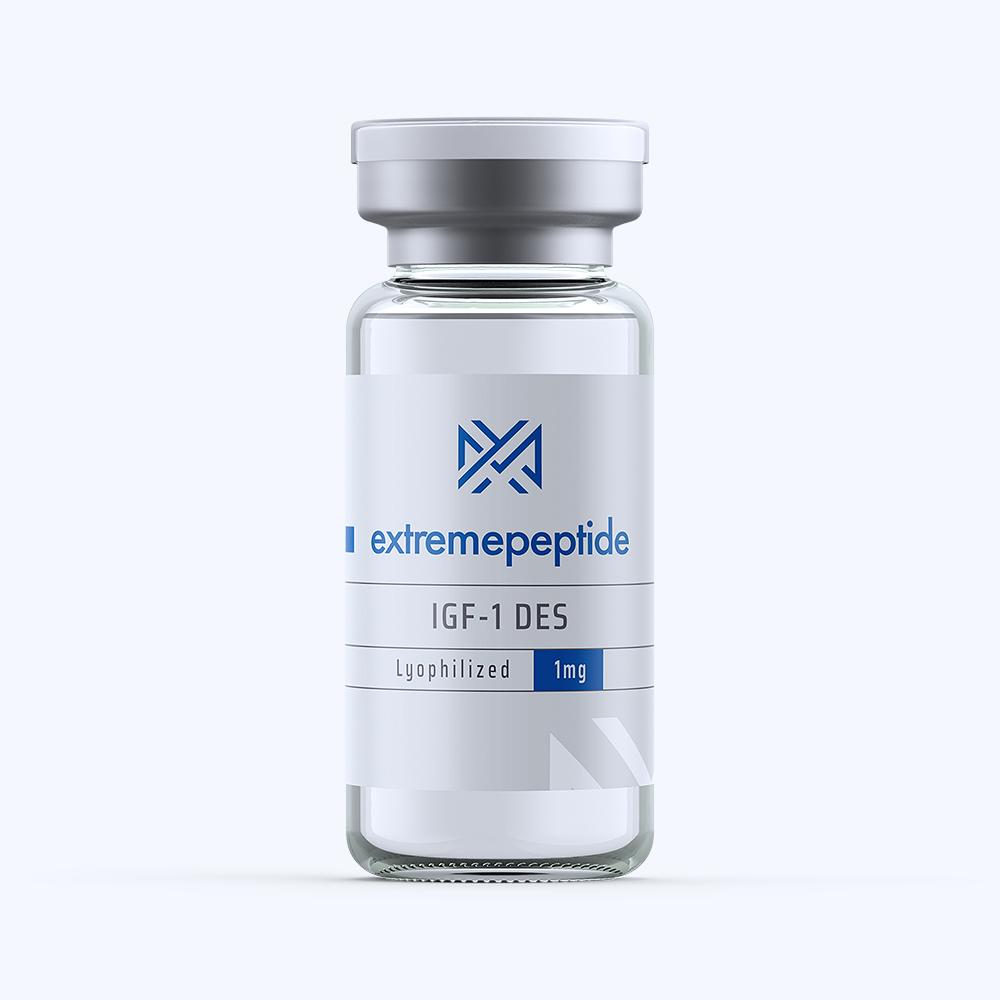
IGF-1 DES 1,3

Original price was: $99.99.Current price is: $76.99.

& Free Shipping
SKU: EX1063-1MG Category:
Guaranteed Safe Checkout

Insulin Like Growth Factor (IGF)-1 DES is a 67 amino acid residue analogy to native IGF-1, which has been documented as an agent for inducing hyperplasia and stimulating cellular proliferation1. By truncating the original IGF-1 polypeptide – a 70 amino acid residue sequence – to just 67 amino acids, retaining residue numbers 4-70 (hence the synonym ‘IGF-1 [4-70]’)2, IGF-1 DES introduces massive enhancements to IGF-1’s biological activity while making marginal improvements to its structural stability, and therefore, residence time, in vivo.

Animal studies have demonstrated the ability of IGF-1 DES to bind directly to natural IGF receptors and stimulate new tissue formation, while inhibiting apoptosis (programmed cell death) in existing tissues3. Especially at muscle cell sites, IGF-1 species are noted to enhance amino acid recruitment, augment the synthesis of new proteins while minimizing the digestion of intracellular protein as a fuel source. Instead, fat deposits are used as energy sources while IGF species are biochemically active4.

Product Comparison

IGF-1 is a key factor in mediating of growth-promoting effects of growth hormone (GH)5. This particular IGF-1 species was developed in order to avoid interaction with IGFBPs (Insulin Like Growth Factor Binding Proteins), which are known to hinder the activity of native IGF-1 over time6. By avoiding this interplay IGF-1 DES is capable of achieving highly active, unimpeded biological activity, which leads to its utility as a fast-acting facilitator of GH-stimulated biochemical activity.

IGF-1 DES and IGF-1 LR3 have both been shown to be more active relative to native IGF-1 when it comes to stimulating new cell growth in animal trials. Compared to IGF-1 LR3, IGF-1 DES is considered to be multi-fold more active as a stimulant of acute hypertrophy7.

Studies investigating the effects of concurrent IGF-1 species and GH (or GH secretagogue) administration have identified their synergy5 in promoting the development of lean body mass and reduction of fat stores in animal test subjects.

Synonyms:

Insulin Like Growth Factor-1 DES; IGF-1 DES; IGF-1 DES 1-3; IGF-1 DES (1-3); DES 1-3; DES 1-3, DES (1-3), IGF-1 (4-70); Somatomedin C analogue; Detropin

Peer-Reviewed Sources:


  1. Musarò, A., McCullagh, K., Paul, A., Houghton, L., Dobrowolny, G., Molinaro, M., & Rosenthal, N. (2001). Localized Igf-1 transgene expression sustains hypertrophy and regeneration in senescent skeletal muscle. Nature genetics, 27(2), 195-200. ↩︎
  2. Shavlakadze, T., Chai, J., Maley, K., Cozens, G., Grounds, G., Winn, N., & Grounds, M. D. (2010). A growth stimulus is needed for IGF-1 to induce skeletal muscle hypertrophy in vivo. Journal of cell science, 123(6), 960-971. ↩︎
  3. Tavakkol, A., Elder, J. T., Griffiths, C. E., Cooper, K. D., Talwar, H., Fisher, G. J., & Voorhees, J. J. (1992). Expression of growth hormone receptor, insulin-like growth factor 1 (IGF-1) and IGF-1 receptor mRNA and proteins in human skin. Journal of Investigative Dermatology, 99(3), 343-349. ↩︎
  4. LeRoith, D., & Yakar, S. (2007). Mechanisms of disease: metabolic effects of growth hormone and insulin-like growth factor 1. Nature Clinical Practice Endocrinology & Metabolism, 3(3), 302-310. ↩︎
  5. Berryman, D. E., Christiansen, J. S., Johannsson, G., Thorner, M. O., & Kopchick, J. J. (2008). Role of the GH/IGF-1 axis in lifespan and healthspan: lessons from animal models. Growth Hormone & IGF Research, 18(6), 455-471. ↩︎
  6. Francis, G. L., Ross, M., Ballard, F. J., Milner, S. J., Senn, C., McNeil, K. A., & Wells, J. R. E. (1992). Novel recombinant fusion protein analogues of insulin-like growth factor (IGF)-I indicate the relative importance of IGF-binding protein and receptor binding for enhanced biological potency. Journal of molecular endocrinology, 8(3), 213-223. ↩︎
  7. Ding, H. U., Gao, X. L., Hirschberg, R., Vadgama, J. V., & Kopple, J. D. (1996). Impaired actions of insulin-like growth factor 1 on protein Synthesis and degradation in skeletal muscle of rats with chronic renal failure. Evidence for a postreceptor defect. Journal of Clinical Investigation, 97(4), 1064. ↩︎
CAS

112603-35-7

InChI

InChI=1S/C319H495N91O96S7/c1-31-162(20)250-308(500)404-249(161(18)19)306(498)390-214(135-245(443)444)285(477)371-193(97-102-241(435)436)269(461)396-225-152-513-512-150-223-296(488)386-213(134-244(441)442)286(478)379-199(120-155(6)7)274(466)366-185(73-52-109-341-316(331)332)261(453)365-187(75-54-111-343-318(335)336)263(455)377-198(119-154(4)5)275(467)370-192(96-101-240(433)434)266(458)372-194(103-117-507-30)270(462)380-208(130-178-85-91-181(421)92-86-178)282(474)397-222(294(486)355-167(25)310(502)408-114-57-79-228(408)300(492)387-200(121-156(8)9)276(468)374-195(69-45-48-105-321)311(503)409-115-58-77-226(409)298(490)353-165(23)254(446)361-183(68-44-47-104-320)264(456)391-216(143-412)289(481)356-168(26)313(505)506)149-510-509-148-221(400-307(499)248(160(16)17)403-288(480)209(127-175-66-42-35-43-67-175)381-267(459)189(93-98-230(323)422)369-273(465)197(118-153(2)3)376-255(447)164(22)352-272(464)212(133-243(439)440)389-305(497)247(159(14)15)402-287(479)202(123-158(12)13)378-268(460)191(95-100-239(431)432)362-253(445)163(21)351-233(425)136-347-258(450)220(395-277(469)201(122-157(10)11)388-302(494)246(326)169(27)416)147-508-511-151-224(399-297(225)489)295(487)384-205(125-173-62-38-33-39-63-173)279(471)367-188(76-55-112-344-319(337)338)265(457)392-219(146-415)293(485)398-223)259(451)348-138-235(427)359-211(132-242(437)438)284(476)363-182(71-50-107-339-314(327)328)256(448)345-137-234(426)358-204(124-172-60-36-32-37-61-172)278(470)382-207(129-177-83-89-180(420)90-84-177)280(472)383-206(126-174-64-40-34-41-65-174)281(473)385-210(131-232(325)424)283(475)375-196(70-46-49-106-322)312(504)410-116-59-80-229(410)301(493)406-252(171(29)418)304(496)349-140-236(428)357-203(128-176-81-87-179(419)88-82-176)257(449)346-139-237(429)360-215(142-411)290(482)393-218(145-414)292(484)394-217(144-413)291(483)368-186(74-53-110-342-317(333)334)262(454)364-184(72-51-108-340-315(329)330)260(452)354-166(24)309(501)407-113-56-78-227(407)299(491)373-190(94-99-231(324)423)271(463)405-251(170(28)417)303(495)350-141-238(430)401-250/h32-43, 60-67, 81-92, 153-171, 182-229, 246-252, 411-421H, 31, 44-59, 68-80, 93-152, 320-322, 326H2, 1-30H3, (H2, 323, 422)(H2, 324, 423)(H2, 325, 424)(H, 345, 448)(H, 346, 449)(H, 347, 450)(H, 348, 451)(H, 349, 496)(H, 350, 495)(H, 351, 425)(H, 352, 464)(H, 353, 490)(H, 354, 452)(H, 355, 486)(H, 356, 481)(H, 357, 428)(H, 358, 426)(H, 359, 427)(H, 360, 429)(H, 361, 446)(H, 362, 445)(H, 363, 476)(H, 364, 454)(H, 365, 453)(H, 366, 466)(H, 367, 471)(H, 368, 483)(H, 369, 465)(H, 370, 467)(H, 371, 477)(H, 372, 458)(H, 373, 491)(H, 374, 468)(H, 375, 475)(H, 376, 447)(H, 377, 455)(H, 378, 460)(H, 379, 478)(H, 380, 462)(H, 381, 459)(H, 382, 470)(H, 383, 472)(H, 384, 487)(H, 385, 473)(H, 386, 488)(H, 387, 492)(H, 388, 494)(H, 389, 497)(H, 390, 498)(H, 391, 456)(H, 392, 457)(H, 393, 482)(H, 394, 484)(H, 395, 469)(H, 396, 461)(H, 397, 474)(H, 398, 485)(H, 399, 489)(H, 400, 499)(H, 401, 430)(H, 402, 479)(H, 403, 480)(H, 404, 500)(H, 405, 463)(H, 406, 493)(H, 431, 432)(H, 433, 434)(H, 435, 436)(H, 437, 438)(H, 439, 440)(H, 441, 442)(H, 443, 444)(H, 505, 506)(H4, 327, 328, 339)(H4, 329, 330, 340)(H4, 331, 332, 341)(H4, 333, 334, 342)(H4, 335, 336, 343)(H4, 337, 338, 344)/t162-, 163-, 164-, 165-, 166-, 167-, 168-, 169+, 170+, 171+, 182-, 183-, 184-, 185-, 186-, 187-, 188-, 189-, 190-, 191-, 192-, 193-, 194-, 195-, 196-, 197-, 198-, 199-, 200-, 201-, 202-, 203-, 204-, 205-, 206-, 207-, 208-, 209-, 210-, 211-, 212-, 213-, 214-, 215-, 216-, 217-, 218-, 219-, 220-, 221-, 222-, 223-, 224-, 225-, 226-, 227-, 228-, 229-, 246-, 247-, 248-, 249-, 250-, 251-, 252-/m0/s1

InChIKey

CYHWAVCMOCQGEC-JKQNXSOYSA-N

Isomeric SMILES

CC[C@H](C)[C@@H]1NC(=O)CNC(=O)[C@@H](NC(=O)[C@H](CCC(=O)N)NC(=O)[C@@H]2CCCN2C(=O)[C@H](C)NC(=O)[C@H](CCCNC(=N)N)NC(=O)[C@H](CCCNC(=N)N)NC(=O)[C@H](CO)NC(=O)[C@H](CO)NC(=O)[C@H](CO)NC(=O)CNC(=O)[C@H](Cc3ccc(O)cc3)NC(=O)CNC(=O)[C@@H](NC(=O)[C@@H]4CCCN4C(=O)[C@H](CCCCN)NC(=O)[C@H](CC(=O)N)NC(=O)[C@H](Cc5ccccc5)NC(=O)[C@H](Cc6ccc(O)cc6)NC(=O)[C@H](Cc7ccccc7)NC(=O)CNC(=O)[C@H](CCCNC(=N)N)NC(=O)[C@H](CC(=O)O)NC(=O)CNC(=O)[C@@H]8CSSC[C@H](NC(=O)[C@H](Cc9ccc(O)cc9)NC(=O)[C@H](CCSC)NC(=O)[C@H](CCC(=O)O)NC(=O)[C@H](CC(C)C)NC(=O)[C@H](CCCNC(=N)N)NC(=O)[C@H](CCCNC(=N)N)NC(=O)[C@H](CC(C)C)NC(=O)[C@H](CC(=O)O)NC(=O)[C@@H]CSSC[C@H](NC(=O)[C@H](CCC(=O)O)NC(=O)[C@H](CC(=O)O)NC(=O)[C@@H](NC1=O)C(C)C)C(=O)N[C@@H](CSSC[C@H](NC(=O)[C@H](CC(C)C)NC(=O)[C@@H](N)[C@@H](C)O)C(=O)NCC(=O)N[C@@H](C)C(=O)N[C@@H](CCC(=O)O)C(=O)N[C@@H](CC(C)C)C(=O)N[C@@H](C(C)C)C(=O)N[C@@H](CC(=O)O)C(=O)N[C@@H](C)C(=O)N[C@@H](CC(C)C)C(=O)N[C@@H](CCC(=O)N)C(=O)N[C@@H](Ccccccc)C(=O)N[C@@H](C(C)C)C(=O)N8)C(=O)N[C@@H](Ccccccc)C(=O)N[C@@H](CCCNC(=N)N)C(=O)N[C@@H](CO)C(=O)N)C(=O)N[C@@H](C)C(=O)NCCC[C@H]C(=O)N[C@@H](CC(C)C)C(=O)N[C@@H](CCCCN)C(=O)NCCC[C@H]C(=O)N[C@@H](C)C(=O)N[C@@H](CCCCN)C(=O)N[C@@H](CO)C(=O)N[C@@H](C)C(=O)O)[C@@H](C)O)[C@@H](C)O

Molecular Formula

C319H495N91O96S7

Molecular Weight

7365.4225

Physical Appearance

Fine White Lyophilized Powder

Stability

Lyophilized protein is to be stored at -20°C. It is recommended to aliquot the reconstituted (dissolved) protein into several discrete vials in order to avoid repeated freezing and thawing. Reconstituted protein can be stored at 4°C