BPC 157
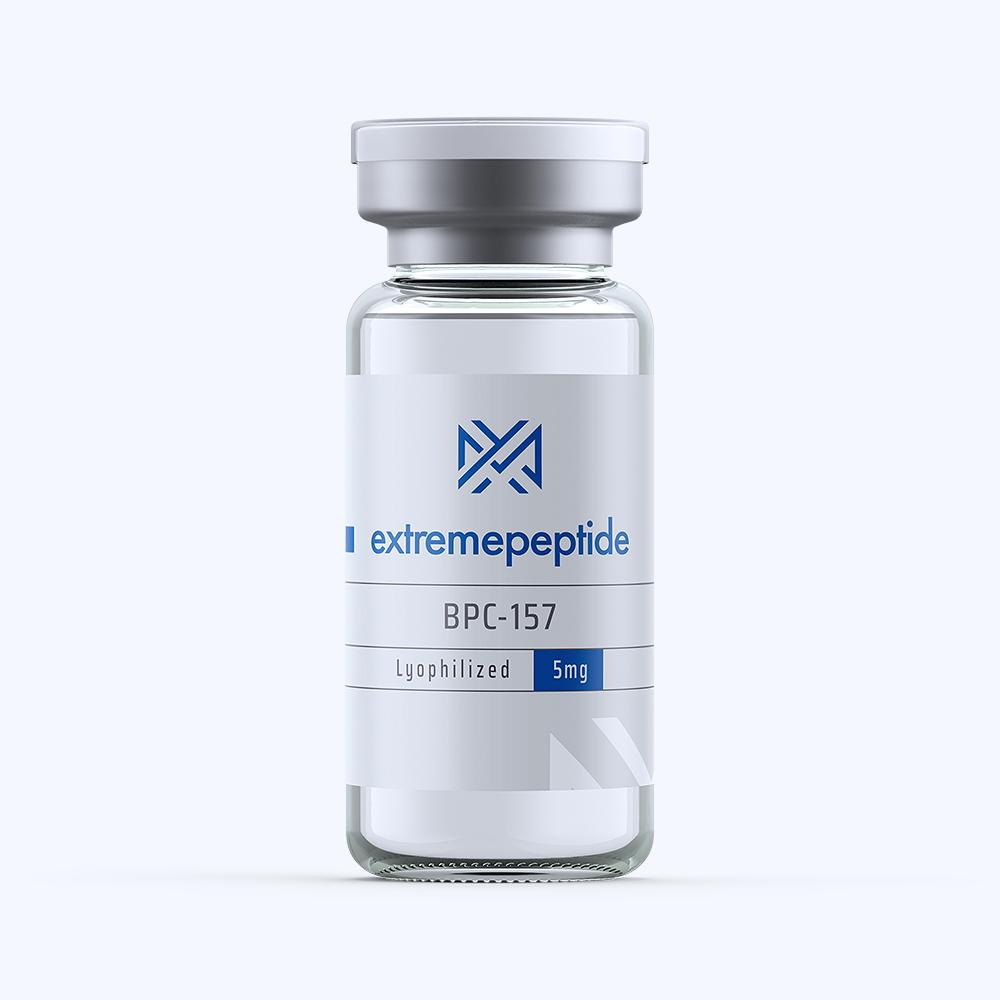
BPC 157 is a 15 amino acid peptide developed to be a fragment analogue to naturally occurring BPC, which appears regularly in gastric juices1. Short for ‘Body Protection Compound’, this peptide has been shown to enhance wound healing, provide ulcer protection, promote angiogenesis (growth of new blood vessels), and act as a potent anti-inflammatory agent2.
BUY BPC 157
This suite of repair and regulatory properties makes BPC 157 a very attractive tool for investigating the treatment of gastro-intestinal conditions like Crohn’s disease, ulcerative colitis, and collagenous colitis3, dental afflictions like periodontitis, as well as internal and superficial wounds in animal testing4.
Fibroblast Recruitment for Enhanced Healing
BPC 157 acts to stimulate the rapid migration of fibroblasts to the site of damage5; these cells play an integral role in providing proteinaceous extracellular matrix material for tissue repair6. BPC 157 has been shown to induce the production of F-actin in recruited fibroblasts7, which is one of the materials necessary to begin rebuilding the site of tissue damage. BPC 157 also assists in the healing of wounds and viscera by increasing the probability of cellular survival under oxidative stress8, which is common at the site of traumatic injury. If fewer cells have died at the site of damage, then more cells can be activated in order to begin repair.
Through its action as a stimulator of tissue repair, BPC 157 shows great potential as an agent for all kinds of tissue repair including muscle, connective tissue, and skeletal components BPC 157.
Synonyms:
BPC 15; BPC-157; Body protection compound 15;
Peer-Reviewed Sources:
- Sikiric, P., Seiwerth, S., Grabarevic, Z., Petek, M., Rucman, R., Turkovic, B., & Brkic, T. (1994). The beneficial effect of BPC 157, a 15 amino acid peptide BPC fragment, on gastric and duodenal lesions induced by restraint stress, cysteamine and 96% ethanol in rats. A comparative study with H 2 receptor antagonists, dopamine promotors and gut peptides.Life sciences,54(5), PL63-PL68. ↩︎
- Seiwerth, S., Sikiric, P., Grabarevic, Z., Zoricic, I., Hanzevacki, M., Ljubanovic, D., … & Kolega, Z. (1997). BPC 157’s effect on healing. Journal of Physiology-Paris,91(3), 173-178. ↩︎
- Sikirić, P., Seiwerth, S., Grabarević, Ž., Ručman, R., Petek, M., Jagić, V., … & Marović, A. (1996). Beneficial effect of a novel pentadecapeptide BPC 157 on gastric lesions induced by restraint stress, ethanol, indomethacin, and capsaicin neurotoxicity. Digestive diseases and sciences,41(8), 1604-1614. ↩︎
- Keremi, B., Lohinai, Z., Komora, P., Duhaj, S., Borsi, K., Jobbagy-Ovari, G., & Varga, G. (2009). Antiinflammatory effect of BPC 157 on experimental periodontitis in rats. J Physiol Pharmacol,60(Suppl 7), 115-22. ↩︎
- Brcic, L., Brcic, I., Staresinic, M., Novinscak, T., Sikiric, P., & Seiwerth, S. (2009). Modulatory effect of gastric pentadecapeptide BPC 157 on angiogenesis in muscle and tendon healing. J Physiol Pharmacol,60(Suppl 7), 191-96. ↩︎
- Krivic, A., Majerovic, M., Jelic, I., Seiwerth, S., & Sikiric, P. (2008). Modulation of early functional recovery of Achilles tendon to bone unit after transection by BPC 157 and methylprednisolone. Inflammation Research,57(5), 205-210. ↩︎
- Chang, C. H., Tsai, W. C., Lin, M. S., Hsu, Y. H., & Pang, J. H. S. (2011). The promoting effect of pentadecapeptide BPC 157 on tendon healing involves tendon outgrowth, cell survival, and cell migration.Journal of Applied Physiology,110(3), 774-780. ↩︎
- Sikiric, P., Marovic, A., Matoz, W., Anic, T., Buljat, G., Mikus, D., … & Hahn, V. (1999). A behavioural study of the effect of pentadecapeptide BPC 157 in Parkinson’s disease models in mice and gastric lesions induced by 1-methyl-4-phenyl-1, 2, 3, 6-tetrahydropyridine. Journal of Physiology-Paris,93(6), 505-512. ↩︎